Let’s be honest, the Bible can be crazy.
Throughout the Bible, many head-spinning events are depicted that would make even the biggest conspiracy theorists scratch their heads. Talkinganimals, heavenly chariots of fire, and bringing back 200 foreskins to marry the King’s daughter (don’t ask). Yet one story in particular near the beginning of human history has sparked many debates and discussions among scholars about what the author meant and what was happening. - the Nephilim.
We first see the Nephilim (or “giants,” depending on your bible version) in Genesis 6, when God is describing the great evil that had befallen mankind before the flood. And we know through the book of Numbers that in comparison to the Nephilim, the Israelite spies “seemed like grasshoppers in [their] own eyes” (Numbers 13:33). Yet who exactly, or what exactly, are the Nephilim? Giants? An angelic hybrid species? Or simply tall men? Interestingly enough, this entire idea of the Nephilim hinges on who, or what, the “sons of God” (Genesis 6:2) were.
In what follows, I will attempt to lay out the three classical views of who these “sons of God” were, while providing a brief defense of my own personal position.
It's easy to treat a passage like this as trivia, the kind of thing you bring up in small group just to see who has an opinion (and trust me, someone always has an opinion). But Genesis 6 isn't just a strange footnote. It reminds us that evil is real and not merely a human problem, that our struggle is "against the spiritual forces of evil in the heavenly realms" (Ephesians 6:12). And it shows us how God responds when His good creation is corrupted. So whatever you conclude about the Nephilim, the question underneath it all is a big one: what kind of God do we serve when evil runs rampant?
Three Views of the Nephilim
View #1: Descendants of Seth
Where Cain failed to fulfill the mandate and continue in righteousness, the third born of Adam, Seth, succeeded. Proponents within this view would then see the “sons of God” as those in the genealogical line of Seth and the “daughters of man” to be the descendants of Cain, the one who was unfaithful to the Lord and committed the first murder. Through this breeding of the faithful with the unfaithful and the neglecting of the command of God, sin compounded and resulted in the Nephilim, an incredibly depraved, powerful, and violent group of people.
View #2: Tyrannical Rulers/Kings
Within this view, the sons of God are seen as tyrannical rulers or despots who possessed a great deal of power and authority over the land. These particular rulers not only saw themselves as kings but as a sort of divine or semi-divine figure, using their authority to force themselves upon women to bear children and create more of these powerful rulers. This argument hinges upon verse 4 of Genesis 6, in which the author says that they “were the heroes of old, the men of renown.” (Genesis 6:4)
View #3: Demonic Beings
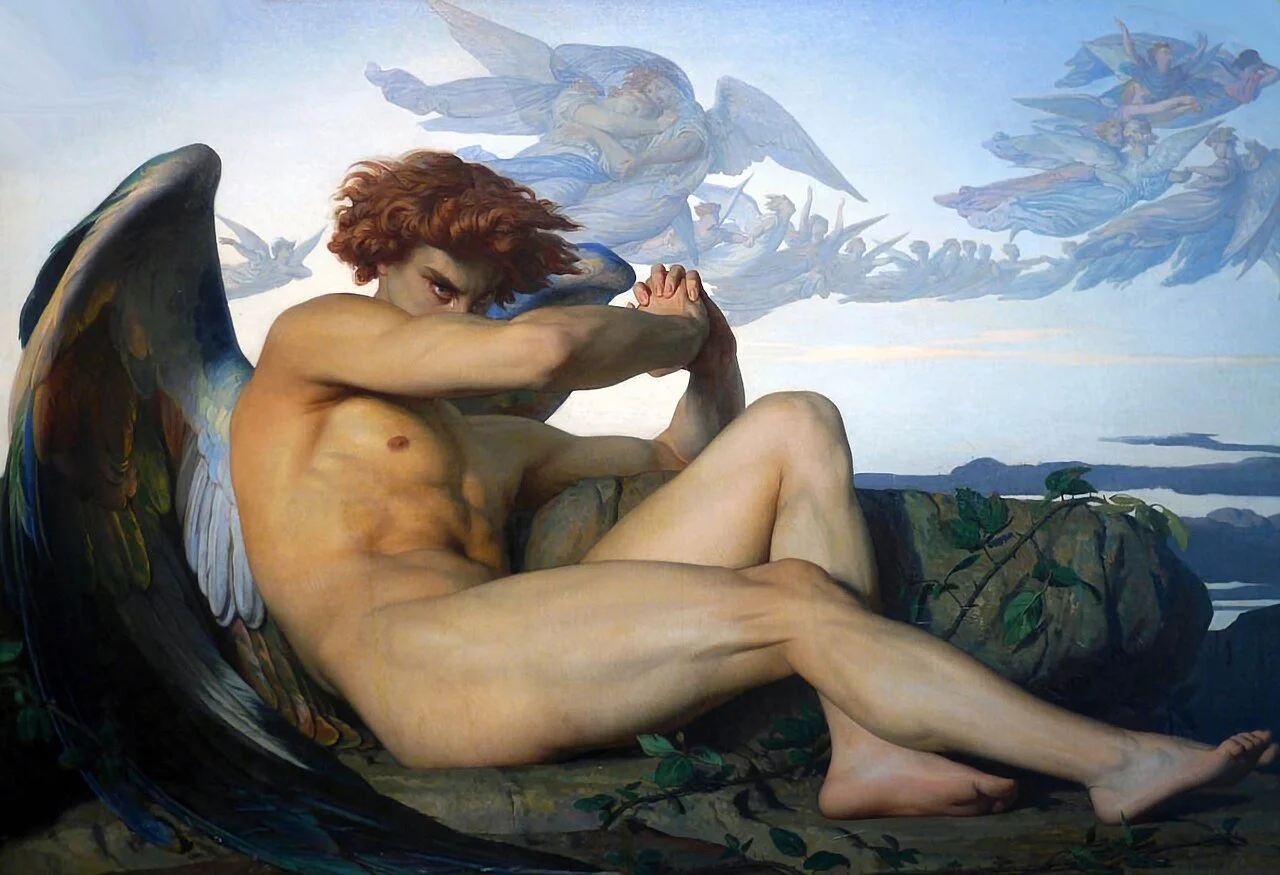
Within this view, the “sons of God” were seen as fallen angels or demonic beings who had forsaken their purpose given by God and sought out sin as opposed to righteousness. These heavenly beings then sought out humans to breed with, creating a literal demon/human hybrid that subverted the purpose of creation and the design that God had intended.
My View: The Nephilim are a product of demon and human interbreeding.
My Reasons
Reason #1: The meaning of “sons of God”
The phrase “sons of God” is translated from the original Hebrew phrase bene elohim, which quite literally means “sons of God, celestial or divine beings. Elsewhere, when this phrase is used in the book of Job or other various places, it almost always refers to angelic or heavenly beings. Looking then at the larger grammatical structure of the text, it is evident that the author of Genesis is clearly juxtaposing the sons of God with the daughter of men. If then, we are to believe that the sons of God are simply referring to a group of humans, why create the clear contrast between the other group of humans, unless to clearly show that the sons of God are not a part of mankind, but a part of something else separate?
Reason #2: The particular evil of Noah’s day
Perhaps the more compelling argument for me personally is the context of the period in which God is about to send the flood. The author of Genesis makes apparent that the evil of the day and the condition of mankind were so poor that there was no other option than to flood the earth. Within this broader context, the author then places the Nephilim, or the offspring of the sons of God, right in the middle of it. This then begs the question: if the Nephilim were simply human-human offspring, what could have been so evil about these people and their situation that God would bring intense and immediate judgment against the entire world? Were there not worse people who have existed before or after? Or was it because something as sinister as the interbreeding of demons and women created something so heinous that God had to respond in judgment?
Conclusion
Now it should go without saying that where the Bible does not give explicit commands or teaching, we shouldn't draw hard lines and separate the body of Christ. So, what is put forth is not dogma, and is something that can be disagreed upon faithfully between Christians. That being said, I believe this view ultimately draws us nearer to the throne of God and the heart of Christ, because when great evil that has never been seen before occurs, such as the subversion of creation to produce something evil, we do serve a God who answers it swiftly and with justice.
But that's not the whole story. Right in the middle of all that darkness, "Noah found favor in the eyes of the Lord" (Genesis 6:8). Before a single drop of rain fell, God was already making a way of rescue, and one day He would send His own Son to triumph over the powers of evil once and for all (Colossians 2:15).
So here's a question worth sitting with: When you see evil in the world, or even in your own heart, do you trust God both as the Judge who will set things right and as the Savior who has already made a way through the flood?