
Praying Through the Psalms
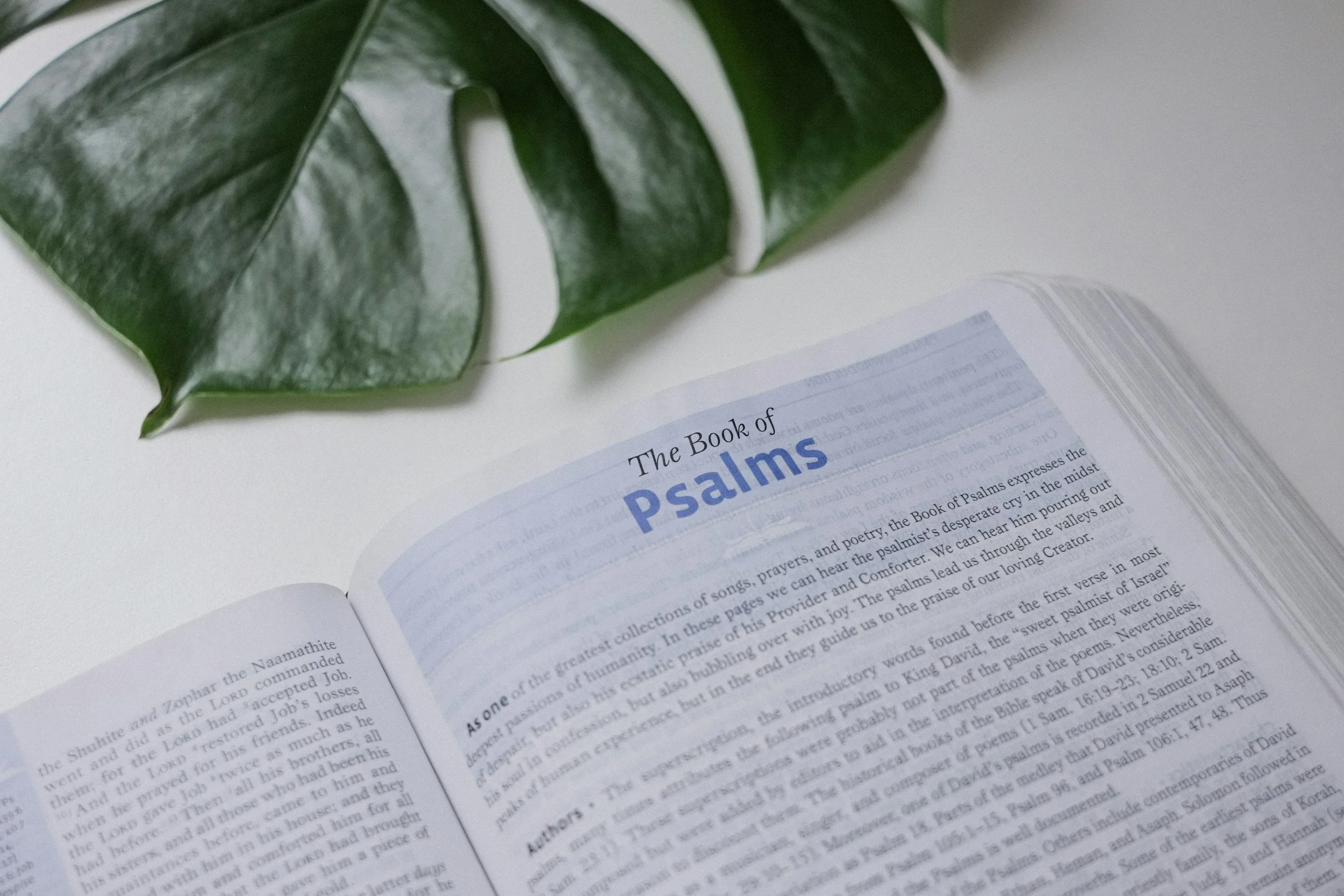
Dietrich Bonhoeffer wrote in his book, Psalms: The Prayer Book of the Bible: “The Psalms is the prayer book of Jesus Christ in the truest sense of the word. He prayed the Psalms and…those who pray the Psalms are joining in with the prayer of Jesus Christ.” During His public ministry, as recorded in the Gospels, Jesus quoted Scripture 1800 times; 180 of those verses were direct quotes of Scripture, mostly from the Psalms. 10% of what Jesus spoke was Scripture!
Jesus, the Word, was saturated with Scripture, so as I follow Him, how might I become saturated with Scripture? Praying through the Psalms this year is a spiritual practice that keeps me in God’s Word because “It is good to give thanks to the LORD, to sing praises to your name, O Most High; to declare your steadfast love in the morning, and your faithfulness by night” (Psalm 92:1-2). As His follower, I want to speak and pray God’s word daily to myself and to the people in my life.
How to Pray Through the Psalms
Challenged by some women of The Gospel Coalition, some friends, and I have committed to praying through the Psalms for at least the first 150 days of 2026. What does this look like for me, and what difference does it make?
Melissa Kruger suggests 4 simple steps in praying through the Psalms: read, reflect, remember, and respond. She recommends reading the Psalm silently or out loud or listening to the Psalm being read, while asking the Lord to guide you in praying His Word. Then she suggests reflecting on the Psalm with questions like: Did you notice any particular words or phrases or imagery in the Psalm? What is the psalmist communicating in this Psalm? What emotions does the Psalm convey? Next, Melissa Kruger invites you to remember, to recall any person or circumstance He would like you to pray for today with the following questions to consider: What are you thankful for today? What needs do you have today? Who in your life needs prayer today? As you consider God’s character (as described in the Psalm you read), what brings you comfort or encouragement? Finally, respond by re-reading the Psalm and using each phrase as a prayer. Allow God’s Word to direct and guide your prayer to express words of thanksgiving, offer supplications for personal needs, request help for others, and speak words of praise to God.
My youngest son has joined me in reading a psalm a day in 2026 and praying through the psalms together. He suggested that we read each Psalm three times with three different questions in mind:
What does this Psalm say about God?
What does this Psalm say about humanity?
What does this Psalm say to me?
A Psalm in Practice
In the middle of February, we came to Psalm 42, which is one of the 11 Psalms attributed to the Sons of Korah, the musical leaders in the tabernacle. This is one of the 14 Psalms that were sung by the Israelite pilgrims as they made their way up to Zion to worship God in Jerusalem.
I read Psalm 42 to discover that it says these truths about God: He is the living God (Psalm 42:2); He is personal, “my” God (Psalm 42:6); All day long, God commands His steadfast love (Psalm 42:8); God is my Rock (Psalm 42:9); God is praiseworthy as my hope and my salvation (Psalm 42:11).
I read Psalm 42 to discover that it says these truths about people: Our souls long for God (Psalm 42:1); We are thirsty for God (Psalm 42:2); We are emotional beings (Psalm 42:3); We remember the joy of festivals (Psalm 42:4); Our turmoil is the tension between a soul that despairs and a faith that hopes (Psalm 42:5); Because of God’s steadfast love, at night we can sing songs and speak prayers to God (Psalm 42:8); We can ask honest questions of God (Psalm 42:9); People choose to hope in God and praise Him for salvation even in the storms of life(Psalm 42:11).
I read Psalm 42 with my personal question of “What does this Psalm say to me?” in mind. The Psalm’s image of a deer panting for flowing streams resonated with me, as my soul pants and thirsts for my living God (Psalm 42:1-2). This reminded me of Jesus’ words: “Blessed are those who hunger and thirst for righteousness, for they shall be satisfied” (Matthew 5:6). I concluded that in the middle of my turmoil, I have a choice. I can focus on my circumstances or fix my eyes on God’s nearness (Psalm 42:5). Because of God’s faithfulness to me with His generous and consistent steadfast love, I will hope in Him. I will express my faithfulness to Him by praying and praising God all night and all day long! And I will use His very Word, the words of life found in the center of His Scriptures, to pray! “Hope in God; for I shall praise Him, my salvation and my God” (Psalm 42:11).
An example of a prayer for a friend that came from Psalm 42:7-9: Lord, our Rock, your steadfast love is all we need! Please rescue my friend from her storm and place her on the rock of the God of our life! Help her to sing to you and pray to you today so that her hope in you can be renewed. Amen.
Whether you decide to commit and pray through all 150 Psalms or simply begin with one — perhaps Psalm 42 — the invitation is the same: to let God's Word shape your words back to Him. The Psalms give us permission to bring our full selves to prayer, our thirst, our turmoil, our praise, and our hope. As Bonhoeffer reminded us, to pray the Psalms is to pray alongside Jesus Himself. That is no small thing.
So open the page, read, reflect, remember, and respond — and discover that the ancient words of the psalmists still have the power to anchor the soul and lift the eyes toward the God who is our Rock, our salvation, and our hope.
