The Yoke of Christ: From Bondage to Bonding
In this modern era of technology, progress appears to be accelerating exponentially. Rapid advancement is now marked in weeks and months instead of years and decades. Progress is looking ever-forward, with sights set just over the horizon to a brave new world of possibility. It’s not surprising, then, that we often overlook the long, arduous journey that brought us here. We forget about the technology that past generations considered commonplace.
The reference that we find in Matthew 11 is a prime example of our disconnect with the technology of the day. Jesus is addressing the gathered crowds as he speaks these words:
“Come to me, all you who are weary and burdened, and I will give you rest. Take my yoke upon you and learn from me, for I am gentle and humble in heart, and you will find rest for your souls. For my yoke is easy and my burden is light.” – Matthew 11:28-30
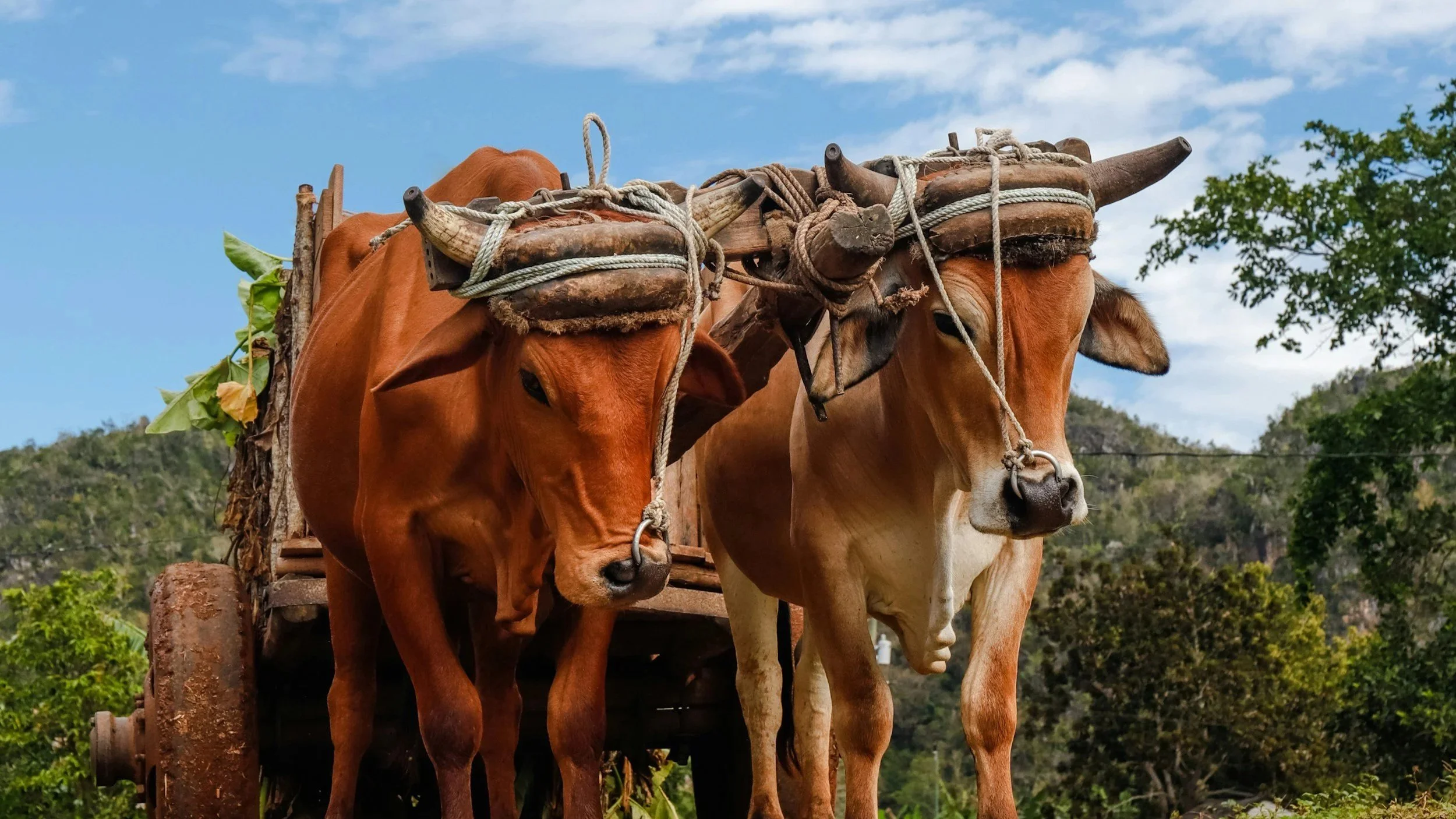
To understand what Jesus means, we need to first understand what a yoke is. For thousands of years, working the land was done with the help of animals. One of the strongest and most durable animals was an ox. Oxen were used to pull farming implements such as plows, harrows, and cultivators. A yoke was most often used to pair two oxen together. The yoke was a wooden crossbar with curved wooden bows that secured around each animal’s neck, enabling them to work as a team to pull much heavier loads than they could on their own. One ox can pull 5,000 pounds, but two oxen together can pull 15,000 pounds. Yoked oxen were eventually replaced with horses, which were replaced with modern, high-powered tractors. Yet, for thousands of years, the yoke was an incredibly useful tool for carrying heavy, stubborn loads and producing a harvest that would sustain life.
With a working knowledge of what a yoke is, we turn back to Jesus’ words of invitation. He sees that the crowds are weary, and he knows that they need deliverance from the burden of legalistic righteousness that the Pharisees had placed upon them. They are tired of trying to measure up to God’s holy standard through the keeping of the law. Their good works can never earn right standing with God, for they have been corrupted by the sinful nature that they inherited through Adam, and they are separated from God’s holiness.
Jesus offers them, and us, a pathway to restoration. He sees our striving, yet he knows that we have sinned and fall short of the glory of God. We are born into slavery to sin, and that sin weighs like a heavy yoke of burden upon our lives, pulling us down and keeping us in bondage. Instead, Jesus invites us to take his yoke upon us, but what is the advantage of exchanging one form of slavery for another?
What we don’t realize is that Christ is offering us freedom, not bondage. A yoke is designed to connect two animals to each other so that they can work together. Christ offers us his yoke so that he can be our yoke-mate, to walk alongside us and help share the burdens of this life. He doesn’t want us to labor alone. Taking his yoke upon us is an invitation to relationship, partnership, and to accept his guidance and teaching. Oxen were often paired together with different levels of experience to facilitate training and maximize efficiency. The more experienced ox would naturally bear the majority of the weight and control the pace, allowing the younger animal to learn without being overwhelmed. This is what Christ did for us on the cross – he bore the weight of our sin upon himself so that we could experience freedom and a restored relationship with God. Isaiah 53 states that Jesus bore our griefs and carried our sorrows, and the Lord laid on him the iniquity of us all.
Jesus invites us to trade a yoke of bondage to sin for a yoke of bonding to him, allowing him to be our source of strength, perseverance, and hope. Jesus promises, “And surely I am with you always, to the very end of the age.” (Matthew 28:20) He will never leave us or forsake us.