Description
Dr. Kurt Bjorklund looks at Luke 15 and Luke 19:10–27 to show that heaven throws a party every time one person turns to God, and that Jesus invites his followers to put their time, talent, and treasure to work in that mission. It's an honest look at why money competes for our trust, and how generosity loosens its grip.
Summary and Application
At Orchard Hill's annual God at Work Weekend, Kurt opened with a simple hope: that church is always a party. After a week visiting every campus and hearing how God is changing lives, he reminded us that the numbers on the screen only matter because each one is a person. One person first came to Kids Fest as a kid from an unchurched family. Years later, in a hard season, they remembered that welcome, walked into an Orchard Hill campus, and met Jesus.
Heaven Throws a Party Over One
The theme comes from Luke 15, where Jesus tells three stories in a row: a lost sheep, a lost coin, and a lost son. Each one ends in celebration. "There will be more rejoicing in heaven over one sinner who repents than over ninety-nine righteous persons who do not need to repent" (Luke 15:7). The lost coin ends the same way, with rejoicing "in the presence of the angels of God over one sinner who repents" (15:10). And the father tells his resentful older son, "We had to celebrate and be glad, because this brother of yours was dead and is alive again; he was lost and is found" (15:32).
The party, Kurt said, happens whenever one person turns toward Jesus, and we get to be part of it in some small way.
Put This Money to Work
In Luke 19:10, Jesus states his mission plainly: "For the Son of Man came to seek and to save the lost." That's the root of Orchard Hill's own mission to help people find and follow Jesus Christ. Right after, Jesus tells the parable of the ten minas (19:12–27). A nobleman hands each servant a mina, about three months' wages, and says, "Put this money to work until I come back." Two servants multiply what they were given. One buries his out of fear.
Our minas, Kurt said, are our time, talent, and treasure. Jesus invites his followers to use them for something eternal, which makes this both an opportunity and a responsibility.
God Gets His Work Done Either Way
Kurt pointed to a detail that's easy to miss: in the story, the nobleman becomes king no matter what the servants do. God isn't waiting on any of us to accomplish his purposes. That takes the pressure off. This isn't really about Orchard Hill, either. Kurt repeated that if you'd rather give somewhere else, give somewhere else. It's about you and God and how he wants to work in and through your life.
You Cannot Serve Both
Jesus didn't hedge: "You cannot serve both God and money" (Matthew 6:24). Money is a rival god for every one of us because it offers the same things God does: validation, security, and enjoyment. To whatever degree we're getting those from money, we're not getting them from God. That's why giving is a spiritual act. Every time we give, we're telling our money, "You are not my god."
Spontaneous, Systematic, Strategic
Kurt walked through three biblical patterns of giving. Spontaneous giving meets a need right in front of you, like the Good Samaritan paying the innkeeper to care for a stranger (Luke 10:25–37). Systematic giving sets aside the first portion of income as a regular rhythm of worship (1 Corinthians 16:1–2). Strategic giving draws on accumulated abundance for something significant, as Israel's leaders did when they gave willingly toward the temple and the people rejoiced (1 Chronicles 29:6–9).
At Orchard Hill, regular giving funds ongoing ministry like Kids Fest, student ministry, and campus life, while year-end giving has funded projects: buildings, campus launches, and now the South Point renovation and a new campus in Grove City.
Start Somewhere
For anyone thinking, "Abundance? I'm barely making it," Kurt's encouragement was simply to start somewhere. Set aside even a portion of the first part of a paycheck and say, "God, this is yours." Maybe cut a daily coffee run down to two days a week. A small amount may not seem to change much, but it changes you, and it changes the spiritual temperature of the church. Scripture is honest that "whoever sows sparingly will also reap sparingly, and whoever sows generously will also reap generously," and that "God loves a cheerful giver" (2 Corinthians 9:6–7). The goal isn't pressure. It's freedom.
The Ripple We Rarely See
We'll rarely see the full impact of faithfulness. Kurt traced Billy Graham's coming to faith back through Mordecai Ham, Billy Sunday, Wilbur Chapman, and D. L. Moody to a little-known Sunday school teacher named Edward Kimball, who faithfully taught a group of boys that included Moody. Nobody remembers Kimball, but his faithfulness rippled out to millions.
As the old saying goes, you can't take it with you, but you can send it ahead. One day none of us will look back wishing we had invested more in things without eternal significance.
Questions for Reflection
When you're honest, where do you look to money for what Kurt named (validation, security, or enjoyment), and what might it look like to trust God with that instead?
Thinking about spontaneous, systematic, and strategic giving, where could you "start somewhere" this season, and who could you talk with about taking that step?
This post was developed with the assistance of artificial intelligence based on the sermon "God At Work Weekend: It's A Party" by Dr. Kurt Bjorklund (Luke 15; Luke 19:10–27, November 15, 2026). While every effort has been made to faithfully represent the content and intent of the original message, readers are encouraged to engage the full sermon audio or transcript for the complete teaching.
-
No referenced material.
-
It is always a party, is what we hope is true. If you're a guest here today, newer to Orchard Hill, today's a little different, a little less singing, and the message is focused on this party idea. I've had a chance over the last week to go to each of our campus locations and party, because I'm just that kind of guy: a partier. I had so much fun because I got to see what God is doing in each of our campus locations, to sit with people and hear their stories. What I can tell you is that if I were living in each of those communities, I would want to be a part of what God is doing in each of those locations. I've gotten to hear accounts of how God is working in people's lives, as I said. So when you see all these numbers on this video, it might be overwhelming, but it really is about what God's doing in people's lives.
A couple of my favorite accounts from this week: I heard somebody say that when they were a kid, they came to Kids Fest in Wexford. Their family was entirely unchurched, and they just got invited. A few years later, they were living in another part of the city and went through something, and they said, "Maybe now is the time for church, for God." Because of their positive experience at Kids Fest, they went down the street to an Orchard Hill campus and there met Jesus Christ, and their life and their future were changed. I talked to somebody who had come to Orchard Hill in the Strip District when they were younger and dating, then got married and moved to a different part of the city and went to a different campus, and they are now helping to launch another one of our campuses. I thought, this is so cool to hear how God is working. I could go on and talk for a long time about all the things God is doing around here.
Our idea for "It's a Party" comes from Luke 15. This is where Jesus tells three stories: the lost sheep, the lost coin, and the lost son. At the end of each of these accounts, there's a statement about celebration, about a party. Here we see it in verse 7. This is about the lost sheep: "I tell you that in the same way there will be more rejoicing in heaven over one sinner who repents than over ninety-nine righteous persons who do not need to repent." In other words, heaven rejoices when one person turns toward God. It's a beautiful celebration. Verse 10, with the story of the lost coin: "In the same way, I tell you, there is rejoicing in the presence of the angels of God over one sinner who repents." It's a party. Then in chapter 15, verse 32, after the older son has complained about the younger son getting the big party in the story of the prodigal son, he says this: "But we had to celebrate and be glad, because this brother of yours was dead and is alive again; he was lost and is found." In other words, the party is whenever one person turns toward Jesus Christ, and we get to be a part of this in some small way.
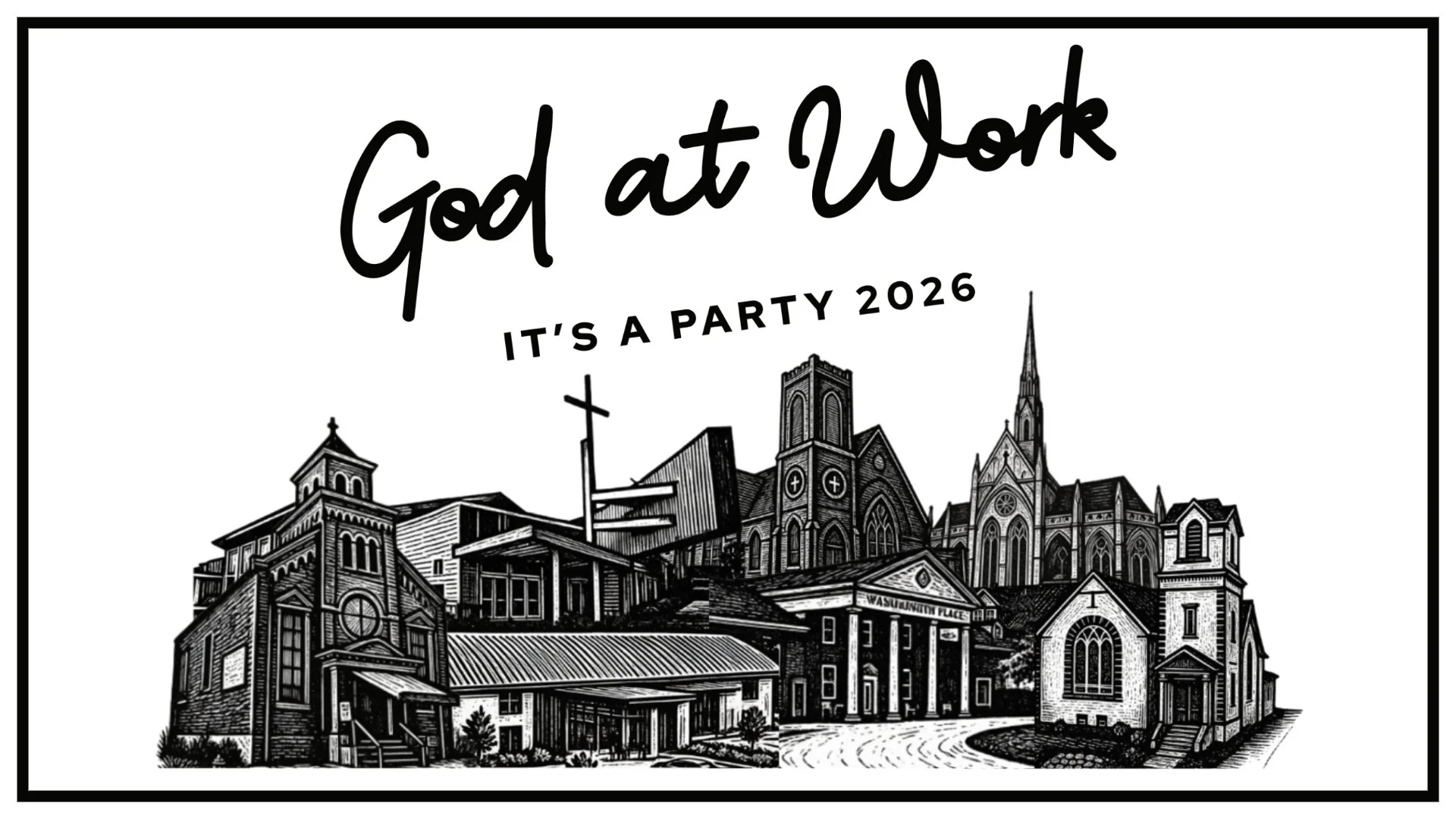
This weekend is about looking back and celebrating, and then looking ahead. But I want you to look with me for a moment at this graphic. This is the highlight of this week. These are all the buildings where we currently meet as a church. This is kind of fun. Do you know that in the United States right now, 9,000 churches a year close, and we get a chance to repopulate these buildings with the work of God? Some of them were churches; some were bars that then became churches, all kinds of things. That was the Altar Bar, the Strip District location, if you didn't get that. On the left is the Strip District location. Down in front is the building in South Point. It's an office building. Behind that is Wexford, up to the right. In the far back is Butler. In front of that is Mars Gibsonia, where we're meeting in the Keene Theater. Then in the front on the bottom is our Beaver Valley location. And the Hill at Heinz is meeting at Heinz Chapel. It gives you a sense of the places and the spaces that God is taking us. Let me show you a map here for a second as well.
In 1989, Orchard Hill began in Wexford. Then in 2013, we were able to launch a campus in the Strip District. For a while that campus struggled a little bit because we didn't have a place. We were meeting all over the place. Our joke was, "If you can find us, you can worship with us." Today there are three services, and the place is thriving with young adults and people from all over the city who are really worshiping there. Then we went to Butler in 2017, and again it took some time, but in 2020 we bought a building, renovated it, and were able to see that happen. Now we have two services there. The place is thriving, feeding people in the community. The young adult gathering had some fifty young adults the other day, students. Just beautiful things. Then in 2022, we launched Bridgeville South Point, in that area. We're still growing toward where we hope to be. You heard in the video about having a building that we were able to purchase, and renovation is on the horizon, but there's a great group there. Then last year we were able to launch Mars Gibsonia and Beaver Valley at the same time. Both have great groups of people who are committed to seeing these churches thrive. And then, unexpectedly last year, we got the opportunity to launch the Hill at Heinz. This fall we launched the Hill at Heinz, which is a ministry for college students at Pitt and at Carnegie Mellon, with a worship service that meets on a regular basis. This is just a little piece of how God is beginning to work.
In Luke 19, Jesus is talking to his followers, and in verse 10 he says, "For the Son of Man came to seek and to save the lost." So the message is great. In fact, Jesus' mission was to help people find and follow him. That's why we say our mission here is to help people find and follow Jesus Christ. Then Jesus tells a story right after he says, here's the thing that changes the trajectory of human lives. This is verse 12: "A man of noble birth went to a distant country to have himself appointed king and then to return. So he called ten of his servants and gave them ten minas. 'Put this money to work,' he said, 'until I come back.'" A mina was basically three months' salary. He said, take this and make it work. "But his subjects hated him and sent a delegation after him to say, 'We don't want this man to be our king.' He was made king, however, and returned home. Then he sent for the servants to whom he had given the money, in order to find out what they had gained with it. The first one came and said, 'Sir, your mina has earned ten more.' 'Well done, my good servant!' his master replied. 'Because you have been trustworthy in a very small matter, take charge of ten cities.' The second came and said, 'Sir, your mina has earned five more.' His master answered, 'You take charge of five cities.' Then another servant came and said, 'Sir, here is your mina. I have kept it laid away in a piece of cloth. I was afraid of you, because you are a hard man. You take out what you did not put in and reap what you did not sow.' His master replied, 'I will judge you by your own words, you wicked servant! You knew, did you, that I am a hard man, taking out what I did not put in and reaping what I did not sow? Why then didn't you put my money on deposit, so that when I came back, I could have collected it with interest?' Then he said to those standing by, 'Take his mina away from him and give it to the one who has ten minas.' 'Sir,' they said, 'he already has ten!' He replied, 'I tell you that to everyone who has, more will be given, but as for the one who has nothing, even what they have will be taken away.'"
The point Jesus is making is that he has a mission, and he invites his people, if you're a follower of Jesus Christ, to be on mission with him. And he says, I've given to my people resources: minas. In this case it was three months' salary, but in our case it's time, it's talent, it's money, treasure, whatever you want to say. He invites us to share in the opportunity to use it for something eternal. It is an opportunity and a responsibility to take this great message and ask, how do we use what God has given us?
I want you to notice very quickly that when Jesus tells the story, the master's work is achieved regardless of what the servants do. I say this because it's really important. Sometimes when you hear people talk about ministry and vision, they make it seem as if, if you don't do something, God can't do his work. God is going to get his work done with or without you or me. What that does is take pressure off, because it is in no way "you better, or something's not going to happen." God is going to get his thing done through Orchard Hill, or somewhere else, some other way, no matter what. But he invites you and invites me to be a part of it, to be part of having this party, so to speak.
If you take Luke 15 and Luke 19 together, this is what God is inviting you to be part of. At Orchard Hill, we talk about this once a year at our "It's a Party" event. We talk about it some other times too, and sometimes you think, "Do we need to talk about this again? Money. What does it mean?" But I don't mind talking about it, because money is actually about stewardship. It's about discipleship. That means this isn't really about Orchard Hill. In fact, I want to say right at the outset, and I say this almost every year around this time: if you want to give money somewhere else, give money somewhere else. This isn't about Orchard Hill. This is about you and God and how God wants to work in and through your life.
Here's the issue with money. Do you know what Jesus said in Matthew 6? He said, "You cannot serve both God and money." Notice what he said. He said you cannot. He doesn't say you might not be able to. You might be able to thread the needle somehow, so you'll be close. He says you cannot serve God and money. What that means is that money is a rival god for every one of us. What do we try to get from money? Validation: I'm worth so much, I'm paid so much relative to other people, so we feel validation. What else do we get from money? Security: because I have money, I'm secure against whatever's coming in the future. What else? Enjoyment: we can buy things and do things that give us enjoyment. Those are on the other side of what God offers us: validation, security, and enjoyment. To the degree that we're getting them from money, there's a degree to which we're not getting them from God. Here's why this is important from a spiritual standpoint: whenever you and I choose to give money, we're saying to our money, "You are not the god of me."
In the Bible, there are at least three ways we're encouraged to give. The first is spontaneous giving. Spontaneous giving is when we look at a need and say, "There's a need, and I can meet it." This is most famously seen in Luke 10, in the story of the Good Samaritan. The Samaritan is walking down the road, and there's the man on the side of the road, hurting. The priest and the Levite go right by. The Samaritan stops, and he opens up his checkbook, if you will. In that day it wasn't a checkbook or a credit card. He hands it to the innkeeper and says, "Here, whatever it takes, take care of this guy." It wasn't giving to a temple. It was a direct gift to somebody in need. That is a biblical category for giving. Sometimes this is you and me being the church in people's lives, just saying, "I can meet a need." I don't need an organization. I don't need a system. I can just meet the need.
The second way we see giving is what I'm going to call systematic giving. Systematic giving is when we simply say, "I'm going to take a portion of my income, the first portion of my income, and give it to the work of God." We see this in 1 Corinthians 16, in 2 Corinthians 8 and 9, and in places in the Old Testament. It's the idea of saying, when I earn something, I give something, usually the first portion. This is 1 Corinthians 16:1–2. It says that on the first day of the week, meaning whenever you're thinking about worship, you take a portion of your income and set it aside so that you can give it. This is simply saying, this is what I do.
The third kind I'm going to call strategic. I call it strategic not in the sense that the other ones are not strategic, but because this is for something where you're not simply saying, "I'm giving because I've received something and I want to honor God with what I've received." Instead, you've looked at the needs around you, and you've decided that you can give something out of what you have that can make a significant difference beyond what you would otherwise do with it. We see this in 1 Chronicles 29, when the people were giving to the work of the temple. In verse 6 it says, "Then the leaders of families, the officers of the tribes of Israel, the commanders of thousands and commanders of hundreds, and the officials in charge of the king's work gave willingly." They gave to the work of the Lord, of the temple. Then it goes on and lists some of the amounts. Verse 8: "Anyone who had precious stones gave them to the treasury of the temple of the Lord." Verse 9: "The people rejoiced at the willing response of their leaders, for they had given freely and wholeheartedly to the Lord. David the king also rejoiced greatly." What was happening here is that people were looking not so much at their income as at their abundance, their wealth, their accumulated assets. They were saying, "I can use some of this for something other than just accumulation for me." So you have spontaneous, systematic, and strategic giving.
Here's what this means at Orchard Hill, in terms of how we think about this as a church. You could say there are two basic buckets that we think about financially in terms of giving and receiving. The first bucket is what we call regular giving. Sometimes we use the word "free will." This goes into all of the ongoing ministry of the church. Sometimes people say, "This keeps the lights on and pays salaries." Whenever you say, "I've received some income, and I've given the Lord the first portion through the local church," it goes into this bucket. From this we pay for all of the things you see going on around the church. This includes our Beyond giving, which goes for some special needs of people in our congregation. It goes for things like health insurance for our employees. If you're around expenses right now, you know that's a huge category. It goes up and up every year. Cost-of-living increases go up. This is just something that's needed to do what we do. But don't think about this so much as need, because that's overly reductionistic. This is Kids Fest. This is Christmas. This is 400 students in student ministry finding their way to Jesus Christ. This is kids in kids ministry. This is what's going on in our campuses. This is all of the things that happen around Orchard Hill, and it changes the trajectory of lives.
The second bucket is what, for us, is typically year-end. This goes to projects. This one supports ongoing ministry, and this one goes to projects. Over the thirty-some years that this church has existed, the church has basically said every year, "We're going to exist and try to do our ministry on this, and then at the end of the year, we're going to ask the people to give, and we're going to fund projects based on this giving." I'm going to draw a dotted line down here, because this is not perfectly divided. Sometimes projects need some money from here, so you take it over here. Sometimes some of the ongoing ministry gets crossed over. As an example, this last year we had the chance to take a ministry to Heinz, the Hill at Heinz Chapel on the campus of Pitt. We didn't have that budgeted, so we took money from the project money you had given before in order to pay for the ministry. But what happens to that is that in another year it ends up over here, because it's no longer a project. Now it's an ongoing ministry. Do you see how that works? That's what I mean: it's not a perfect system, but that is basically how things are funded here.
If you look back over the years, just in the last twenty-one years or so that I've been the pastor here, when I first came, a lot of this year-end money went just to fund this, because we were kind of upside down in terms of our budget. But over the years, we've gotten to the point where most of our expenses are handled through regular giving, and now we're looking at projects. We were able to build Kidsburg in Wexford, which is the addition in the lobby and back, to get out of the trailer. If you've been around that long, you remember that. For years that was our project every year. That's what we were shooting for. Then in 2013 we were able to launch the Strip District, and a couple of years later we were able to buy the property and renovate it and get that campus into a building. Then we were able to build the chapel and add the offices at our Wexford location. The same year we were able to launch Butler, and a couple of years later to buy and renovate a building. Then we were able to renovate the worship center in Wexford. Through the giving that you've done over the years, we've been able to help projects in Haiti, to begin the residence program, to add a second story to the Kidsburg wing in Wexford, to continue to develop and launch South Point, to buy a building in Beaver, to launch in Beaver, and to launch in Mars Gibsonia. My point is that this giving has allowed the church over the last twenty years to do all the things you've begun to see.
You may ask, "Okay, so where are we going?" It used to be that we would say, "Here's the big project for this year or the next couple of years." But now we're at a point where the projects have become so numerous that what we're basically doing is saying, "Would you just pray about it and give as you feel led?" Then the church will make the decision about what we can or can't do. In a sense, this is what we've tried to do over all of our time: as you pray about it and give, we'll do ministry based on what God provides through the people of the church, rather than having a big vision and creating a big pressure and saying everybody needs to give up their second car or something like that. It's just saying, "Out of the abundance that you have, and in faithfulness with what God has entrusted to you, we'll try to do the ministry that God has given us."
What this means for this next year is a couple of things. You heard about the building in South Point. That core group has been meeting in a theater for the last couple of years, and that's been a challenge. We were able to buy a building, and here are some AI renderings of what it will look like. You get a new lobby. You get a new space on the inside where people can gather easily. You'll have Kidsburg, a cafe, and then you'll go upstairs and have this worship space. By the way, AI put those windows in. I'm pretty sure it won't look like that, although it does look out at a golf course, but you won't be able to see it. That is one of the big projects. It's a 20,000-square-foot building, and if you know anything about the cost of renovation, that's going to be a big number.
We have said that each campus has some projects. This building is not getting younger, and as buildings age, there are things that need to happen. Those projects are rolled into this. Sometimes it's projects like paving parking lots, adding a house for the residents, or doing different things that just need to be updated. Then we talk about opportunities that God gives us, just being ready for opportunities. On your way out today, you'll get a little pamphlet that details this, and it says, "Opportunities for how God is working." One of the ways we think about this is that we don't totally know where God is going to move. Even since we printed this, which was just in the last two weeks, something happened that has given us a new opportunity. A year or so ago, some people who had been part of Orchard Hill Wexford, then Orchard Hill Strip, and are now living up near Grove City and Gallant in that area, contacted me and said, "We need Orchard Hill up here." I went and met with them and looked at it and said, "Well, we need a building. We need all kinds of stuff. Thank you, but we're already launching some campuses this year." They kind of stayed at me, and it ended up that a church came up for sale. We went and talked to them, and over the course of the last few months we've talked to this church, and last Sunday they voted to give us their space and to have their people join Orchard Hill and become Orchard Hill Grove City. This is the campus we're going to add. This is the building, and this is what it can look like. It seats maybe about 200 people inside. This is the kind of thing we want to be ready to respond to as God gives us opportunity. Again, that's going to take some resources. We're going to have to hire staff. We're going to need to upfit the building. The building needs some things. My point is that this is the kind of thing this giving goes toward, to be able to say, "We're ready to do this."
On your way out, you'll get a little card that talks about our goal. We put on there $1.5 million for year-end this year. That's in line with where we've been in recent years. As people have given generously, that has allowed us to continue to do things like this. But I just want to tell you that's not nearly enough for all the things God is putting in front of us. Again, that's not to put any pressure on anybody. That's just to say, if you have an abundance and can do more than you've done in past years, the opportunities are here.
Now, I realize that some of you would say, "Abundance? I'm barely making it." Maybe for some of us it isn't that we have an abundance to give, but maybe we didn't do even what we had intended to do over the course of the year, and we say, "You know what? I'm going to use this as an opportunity to set this right." I know there are debates around the church about tithing. Is it New Testament or not? In the Old Testament, a tithe was thirty percent, some of which went to taxes, so is it exactly analogous? But here's what's true: rarely in the New Testament does God say, "This was the Old Testament standard, and now I'm going to do this." So I think you can make a case that it isn't an exact amount. What is significant is that you simply say, "God, I'm going to start somewhere." For some of us, it will just be saying, "I'm going to take even one portion of the first part of my paycheck and say, 'God, here, this is yours. This is no longer mine.'" You may say, "My little bit isn't going to make a difference." That might be true, but here's where it makes a difference: it makes a difference for you, and it makes a difference in the spiritual temperature of the church.
When I say start somewhere, what I mean is: is there any way I could cut some expense or do something that would allow me to be faithful in this area? Let me give just one suggestion. I'm only going to give one, and this will maybe step on some toes. Do you know how much money you spend if you go to Starbucks every day? I mean, six dollars a day times... and that's if you get the cheap one. Just do the math. That adds up. So maybe you say, "Tuesdays and Thursdays I go to Starbucks, and there's some money I can say, 'This is what I'm going to allocate to the mission of Jesus Christ.'" That's just a start.
Some of us may be here and saying, "I get all this, and I've heard all this, but it's lean right now. It's tough right now." One of the things the Bible is unapologetic about, in 2 Corinthians 8 and 2 Corinthians 9, is that God loves a cheerful giver. But it also says that whoever sows sparingly will also reap sparingly, and whoever sows generously will also reap generously. Maybe the reason it's been tight is that you haven't given in a way that's substantial. Again, I don't want you to feel pressure, but I want you to be free in Christ.
What we ask you to do, and again, we've asked this for years, is take the card, fill it out, pray about it, and say, "This is what we can do." If you can do it by the end of the year, great. If it goes into next year, whatever. If you want to go old school, fill it out on a card. You may pray about it and sense the number zero. You may say, "You know what? We've done all we're going to do this year." We'd love for you to still turn in a card, because it says, "We're with the mission," whatever that is, even if right now we're not able, or we've done what we're going to do. Some of you may go online and choose to do it and just hit a number. I think you probably have to give something online or it doesn't register, but hit a one and say, "That's our year-end," because it says we're in, we're with it. But for most of us, there's probably opportunity there.
I want to come back and say this again. I said it earlier, but if for some reason you're here and you're thinking, "I don't like multisite, I don't agree with this, or I don't like how this is happening at Orchard Hill," can I just say, okay, give somewhere else. Don't let that be the reason you don't participate in being a steward of your resources with God. This is not about what Orchard Hill needs. This is about us responding to God in stewardship. Why? Because you cannot serve God and money. Money is a rival god, and if you don't aggressively give, in some ways you are letting money be a god for you. What we want is for you to get to the point where you're able to say, "God, I'm trusting you with my resources."
As Orchard Hill has grown, one of the cool things about multisite is that it's an opportunity for us to participate with the other campuses. Here's what I mean. When a tree grows, it can only grow so big. But when you spread out a tree into multiple trees, into an orchard, if you will, there's more fruit from more trees. By math, it just happens. Multisite church planting is a fine strategy too, so this is not against church planting, but one of the things that's really cool about multisite is that the trees are actually interconnected. If you've ever been to Colorado or Utah and seen the aspen trees, it's a beautiful thing, because the trees are all one continuous organism. Their root system grows underground from one tree to another. So when one tree is struggling, the other tree is thriving, and its strength comes to the next tree. What we get to see now is that the grove, the orchard, if you will, of Orchard Hill is getting more trees with a stronger root system, and it is something God is using to reach lives.
But here's the thing: even the numbers you've heard today are just numbers compared to what God is doing in lives. We'll rarely see the impact of all that God is doing. Numbers are one thing, and so are current stories, but what we don't see is the ripple effect of what happens today. What happens when a student comes to faith in Jesus Christ and five, ten, fifteen years from now doesn't live in Pittsburgh but is living in another city, in another country, in another state, serving the purposes of God in a church there? That ripple effect is huge. When a student turns from an addiction, or a person gets on a track they weren't on, the ripples are huge.
I want to share one story with you about how this works. Maybe you've heard the name Billy Graham. Billy Graham is said to have spoken to more people about Jesus and led more people to Jesus than any other person who has ever lived. He used to do crusade evangelism, before the internet, so that was a thing. But here's the story of Billy Graham. Billy Graham came to faith at a crusade run by a man named Mordecai Ham. You may have heard that name, or you may not have. Mordecai Ham was a traveling, itinerant preacher who never had a lot of fame or notoriety in the Southeast. But Billy Graham, as a young person, walked into a crusade in Charlotte, North Carolina, heard about Jesus, and gave his life to Jesus. Mordecai Ham heard about Jesus from Billy Sunday. Maybe you've heard that name. Billy Sunday was a traveling evangelist who had been a baseball player and gave up his baseball career to be able to talk about Jesus. In a crusade that he ran, Mordecai Ham came to faith. But Billy Sunday heard about Jesus from a man named Wilbur Chapman, who was a local church minister where Billy Sunday had been. And Wilbur Chapman heard about Jesus from D. L. Moody, who had been a traveling evangelist and was also of some note around the Moody Church in Chicago. Do you know how D. L. Moody came to faith in Jesus Christ? From a Sunday school teacher named Edward Kimball, whom nobody has heard of, because Edward Kimball taught Sunday school faithfully to a group of young boys. Among them was D. L. Moody, who led Chapman, who led Sunday, who led Ham, who led Billy Graham to Christ. I was talking to somebody in between services today, and they said, "Do you know that my parents trusted Jesus Christ at a Billy Graham crusade, and then I trusted Christ? So I'm in that string." I said, "Yes, you are."
My point is that we don't know the extent of what God is doing or will do through what we get to be a part of. But the party gets started when we're faithful to God. I don't know of a better return on investment, because here's what I know, for myself and for you. It's a good thing to have some resources and to say, "I even want to save some so I can pass it on to my kids, my grandkids, maybe someday." That's a good thing. It's good biblically. It's in Proverbs: a righteous person leaves an inheritance. But what I also know is that there will come a day when you will die, and I will die. What's the old saying? You can't take it with you, but you can send it ahead. When that day comes, you're not going to look back and say, "I wish I had done stuff that doesn't have eternal significance." We get that chance right now to help start that party again.
If you're a guest here today, I just want you to know we aren't asking you to participate in this. We want you to come and experience what many of us have experienced here at Orchard Hill, which is finding Jesus Christ, beginning to follow him, experiencing community, and starting to feel like we're part of the mission of God. That's what we want for you. That happens as you acknowledge that Jesus Christ came to seek and to save the lost, and as you acknowledge your own lostness and say, "God, I know that I need a Savior, that Jesus Christ is that Savior, and I trust him." When we do that, he invites us into his mission.
I'm going to pray, and the team is going to come and lead a song of celebration. We invite you to the party in the lobby afterward. There's some fun food, and it needs to be eaten, so calories don't count on Sunday.
Let's pray. God, thank you for what you're doing in Orchard Hill, in people's lives all over this region. God, thank you for the people you've used here in their time, their talents, and their treasure, investing in what you're doing. Thank you for the lives you've been changing. God, we thank you for the impact that will go beyond us, beyond our lifetime, even into other people's lives, into the future. We ask that you would use what is done here and now in ways that transcend our understanding, that maybe we'll never know until the other side of eternity. God, thank you for your gifts to us. We pray all this in Jesus' name. Amen.
================================
Disclaimer: This transcript was generated and edited with the assistance of AI. It has been cleaned up for readability, with filler words removed and grammar updated, but it may still contain errors or differ slightly from the message as it was spoken. For the original message, please refer to the audio or video recording.